Premium TPE Male Products | Flexible OEM Support


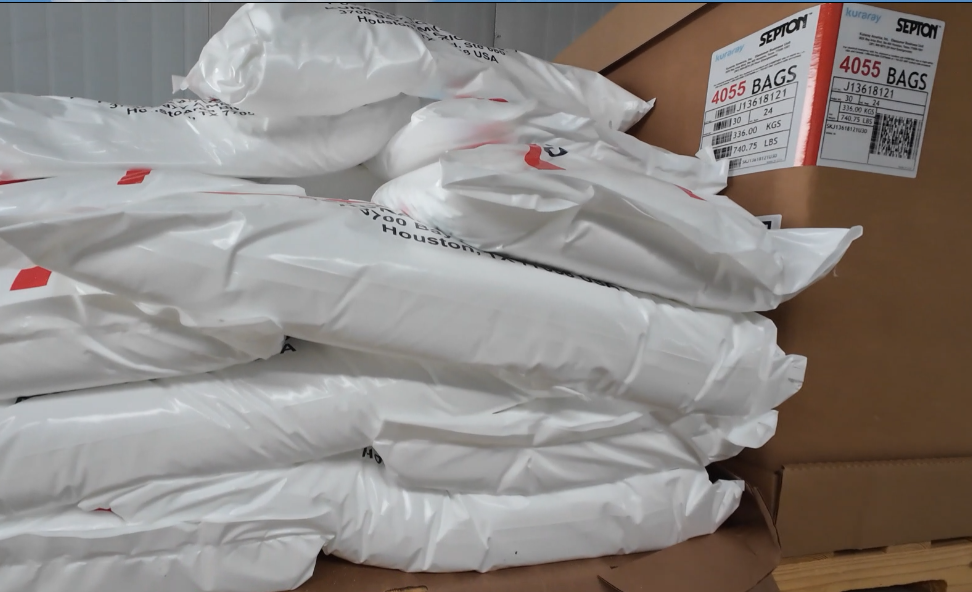
More B2B buyers have started asking us detailed questions about materials.
A few years ago, one of the most common questions was simply:
“Is this product TPE or silicone?”
Now, some buyers go one step further:
- What kind of TPE do you use?
- Is it a styrenic TPE?
- SEBS or SEEPS?
- What is the material grade?
- Who is the raw material supplier?
These are useful questions because TPE is not one single material.
What Is TPE?
TPE stands for thermoplastic elastomer, which describes a broad family of materials that combine rubber-like flexibility with thermoplastic processing characteristics.
Within the TPE family, there are different material types.
One important group is styrenic thermoplastic elastomers, often referred to as TPS or styrenic TPE.
SEBS and SEEPS both belong to this family.
SEBS vs SEEPS: What’s the Difference?
SEBS stands for Styrene-Ethylene-Butylene-Styrene.
SEEPS stands for Styrene-Ethylene-Ethylene/Propylene-Styrene.
Both can be used as base polymers in soft TPE formulations, but they are not identical materials.
The final performance of a TPE product does not depend only on whether the base polymer is SEBS or SEEPS. It also depends on the complete formulation, including the polymer grade, oil, additives, hardness target and processing conditions.
This is why simply saying “we use TPE” does not tell a B2B buyer very much about the actual material.
What Material Do We Use?
For our TPE production, one of the base materials we commonly use is Kuraray SEPTON™ 4055.
SEPTON™ 4055 is a SEEPS-type styrenic thermoplastic elastomer.
However, SEPTON™ 4055 is not the complete TPE formulation by itself.
It is one of the base materials used in the formulation. The final material properties depend on how the complete compound is designed for the product.
This distinction is important when discussing materials with an OEM manufacturer.
Why Does the Specific Material Grade Matter?
Two products may both be described as “TPE,” while their actual performance and cost can be different.
When developing a TPE formulation, manufacturers may need to consider:
Softness
Different products and markets may require different levels of softness.
Elasticity and recovery
The material needs to deform and recover appropriately for the product design.
Tear resistance
Very soft material still needs sufficient mechanical strength for its intended application.
Surface characteristics
The formulation can affect the feel and behavior of the finished surface.
Processing stability
Material selection also needs to work with the production process and product structure.
Cost
Different polymers, grades and formulations can have significantly different raw material costs.
For this reason, comparing two quotations only by asking whether both products are “TPE” may not provide enough information.
TPE or Silicone Is Only the First Question
The same trend can also be seen with silicone products.
Some B2B buyers no longer ask only:
“Is it silicone?”
They may ask about the curing system, such as whether the material is platinum-cured silicone, as well as hardness and other material properties.
For professional sourcing, material discussions are gradually becoming more specific.
What Should B2B Buyers Ask About TPE?
When evaluating a TPE supplier or OEM project, buyers can ask:
- What type of TPE is being used?
- What is the base polymer?
- Is it SEBS or SEEPS?
- What material grade is used?
- Who is the raw material supplier?
- Can the softness be customized?
- Are material test reports available?
- Does the formulation change for different product requirements?
These questions provide much more useful information than simply asking:
“Is it TPE?”
Looking for a Reliable OEM Partner?
Yammy specializes in premium TPE male products, including Pocket Pussy, Breast Masturbators, Realistic Hip, TPE Torso, and Penis Pumps.
We provide OEM & ODM services, including custom logos, private-label packaging, product customization, and flexible production solutions for distributors and wholesale brands.
Contact us today to discuss your OEM requirements and request a quotation.